
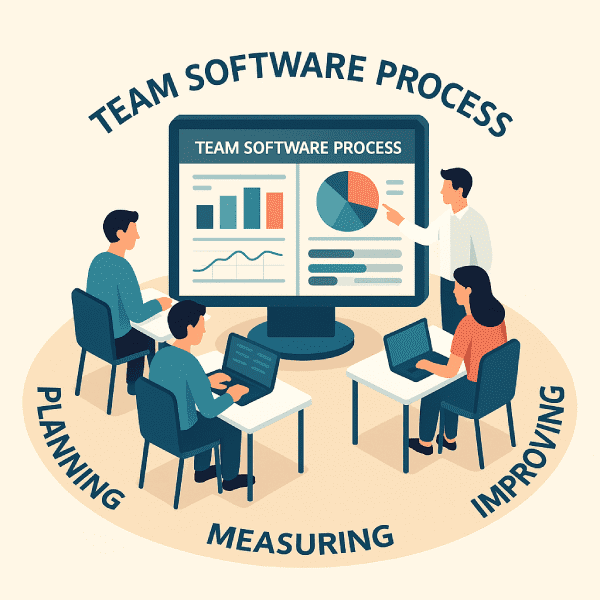
Introduction to Team Software Process
If you have ever wondered, what is team software process, you are not alone. Many organizations today are searching for structured, reliable ways to improve software quality while keeping teams aligned. The team software process is a disciplined framework that helps development teams plan, manage, and track their work in a measurable way.
In simple words, team software process is a structured approach designed to help software teams deliver high quality products on time and within budget. It focuses on teamwork, data driven planning, defined roles, and continuous improvement. Unlike informal development styles, this method ensures everyone knows their responsibilities and follows clear procedures.
Modern businesses demand predictable software delivery. That is where team software process truly shines. It emphasizes accountability, transparency, and performance measurement. Because of that, organizations can reduce defects, manage risks, and boost productivity.
As we explore deeper, you will clearly understand what is team software process, how it works, and why it remains relevant even in today’s Agile dominated world.
The Origin and History of Team Software Process
Understanding the background helps answer the question: what is team software process and why was it created?
The team software process was developed by Watts Humphrey at Carnegie Mellon University. Humphrey was also the founder of the Software Engineering Institute. He believed that software development could be improved through discipline, measurement, and structured teamwork.
The Role of Watts Humphrey
Watts Humphrey introduced the Personal Software Process before developing TSP. His idea was simple but powerful. If individual engineers improve their personal discipline, teams can perform better collectively.
Humphrey’s philosophy was based on data. He encouraged engineers to track time, defects, and effort. By measuring performance, teams could make realistic estimates and continuously improve.
Development at Carnegie Mellon University
The Software Engineering Institute refined the model in the late 1990s. It was designed to support large, complex projects that required high reliability. Industries such as aerospace, defense, and finance adopted it because of its structured methodology.
Over time, team software process evolved to align with modern development needs. Although Agile frameworks became popular, TSP still provides strong value in environments that demand strict quality standards.
Core Principles of Team Software Process
To fully understand what is team software process, you must examine its guiding principles.
-
Self Directed Teams
Teams plan and manage their own work. -
Defined Roles
Each member has a specific responsibility. -
Measurement Driven Decisions
Data is used for planning and improvement. -
Quality First Mindset
Defect prevention is prioritized over defect correction. -
Continuous Improvement
Teams conduct postmortem reviews to learn and grow.
Unlike chaotic workflows, TSP promotes clarity. Everyone knows the schedule, quality goals, and expected outcomes. Because of this structure, teams gain confidence and accountability.
Key Phases of Team Software Process
Now let us explore the operational side of what is team software process.
Launch Phase
This is the foundation stage. The team sets goals, defines roles, and creates a development plan. During this phase, the team agrees on quality objectives and schedules.
Strategy Phase
In this phase, detailed planning happens. Tasks are broken down into manageable units. Effort estimation is performed using historical data.
Development Phase
This is where coding, design, and testing occur. Engineers track time spent and defects identified. Regular meetings ensure progress is aligned with goals.
Postmortem Phase
After project completion, the team reviews performance. What went well? What needs improvement? These lessons are documented for future projects.
Each phase contributes to disciplined execution. As a result, team software process helps maintain consistency across projects.
Roles and Responsibilities in TSP
Clear roles are essential in team software process. Typically, roles include:
-
Team Leader
-
Development Manager
-
Quality Manager
-
Planning Manager
-
Support Manager
-
Process Manager
The team leader coordinates overall activities. The quality manager monitors defect rates. The planning manager ensures accurate scheduling.
Because roles are clearly defined, confusion is minimized. Accountability becomes stronger, and collaboration improves.
Tools Used in Team Software Process
Although TSP is process focused, tools enhance its efficiency. Common tools include:
-
Time tracking software
-
Defect tracking systems
-
Project management dashboards
-
Metrics reporting tools
These tools help teams measure productivity and quality. Since data is central to TSP, tracking tools are essential.
Many organizations integrate TSP principles with modern tools like Jira or Azure DevOps to streamline workflow.
Benefits of Team Software Process
Why should organizations care about what is team software process? The answer lies in its benefits.
1. Improved Quality
Defect tracking reduces errors early in development.
2. Accurate Estimation
Historical data improves planning accuracy.
3. Higher Productivity
Structured workflow minimizes wasted effort.
4. Stronger Team Collaboration
Defined roles eliminate confusion.
5. Reduced Risk
Continuous monitoring helps detect problems early.
6. Predictable Delivery
Teams meet deadlines more consistently.
7. Accountability
Each member is responsible for measurable outputs.
8. Customer Satisfaction
High quality software increases trust.
9. Data Driven Improvement
Lessons learned are documented and reused.
10. Professional Growth
Engineers develop disciplined work habits.
Clearly, team software process is more than a framework. It is a mindset of excellence.
TSP vs Agile and Scrum
You may wonder how TSP compares with Agile methods like Scrum Alliance promoted Scrum frameworks.
Agile focuses on flexibility and rapid iteration. TSP emphasizes discipline and measurement. While Agile encourages adaptability, TSP prioritizes structured planning.
However, these approaches are not enemies. Many organizations blend TSP measurement practices with Agile workflows. This hybrid approach provides flexibility with control.
Real World Applications of Team Software Process
Industries with high reliability requirements often adopt TSP.
-
Aerospace systems
-
Defense software
-
Financial transaction platforms
-
Healthcare management systems
These sectors cannot afford frequent failures. Therefore, structured processes like TSP are valuable.
For further insights, you can explore resources at the Software Engineering Institute website:
https://www.sei.cmu.edu
Challenges in Implementing TSP
Despite its benefits, adopting team software process is not always easy.
-
Requires training and discipline
-
Documentation can feel heavy
-
Resistance to structured processes
-
Initial setup effort is high
However, with proper leadership and commitment, these challenges can be overcome.
Best Practices for Successful TSP Adoption
-
Provide proper training.
-
Start with pilot projects.
-
Use supportive tools.
-
Encourage transparent communication.
-
Focus on continuous improvement.
When implemented correctly, TSP becomes a competitive advantage.
FAQs About Team Software Process
1. What is team software process in simple terms?
It is a structured method that helps software teams plan, track, and improve their work using data.
2. Who created the team software process?
It was developed by Watts Humphrey at Carnegie Mellon University.
3. Is team software process still relevant today?
Yes, especially in industries that require strict quality control.
4. How is TSP different from Agile?
TSP focuses more on measurement and discipline, while Agile emphasizes flexibility.
5. Can TSP be combined with Scrum?
Yes, many organizations combine TSP measurement practices with Scrum frameworks.
6. What industries use TSP?
Aerospace, defense, healthcare, and financial sectors frequently use it.
Conclusion
So, what is team software process? It is a disciplined framework that empowers software teams to deliver high quality products through structured planning, defined roles, and data driven improvement.
In a world where deadlines are tight and expectations are high, structured processes matter. Team software process provides the clarity and accountability modern organizations need. Although it requires effort to implement, the long term benefits are significant.
By embracing its principles, teams can improve quality, reduce risk, and achieve predictable success.